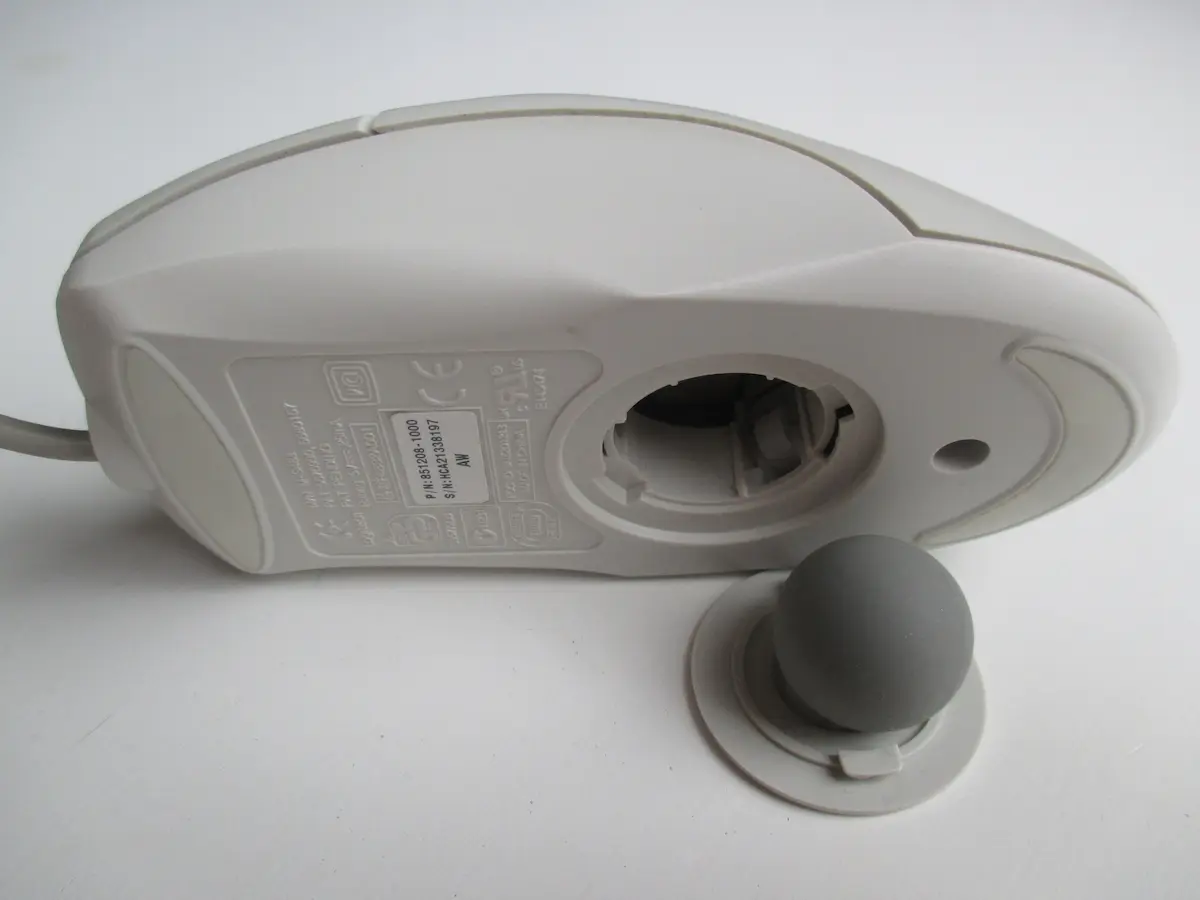
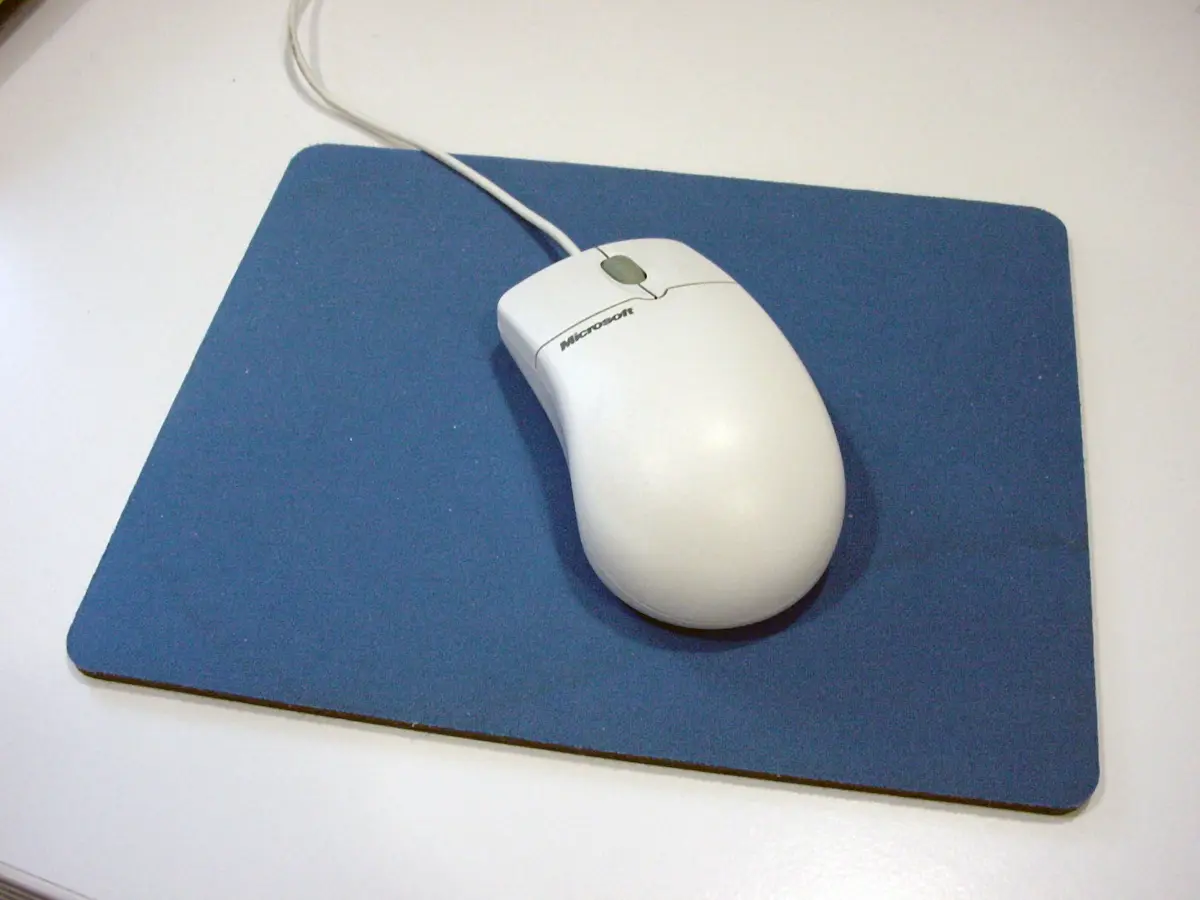
If you lived through the late 90s or early 2000s, you surely remember a classic sound: the "click-click" accompanied by the not-always-smooth sliding — which sometimes got stuck — of a beige mouse.
That peripheral, which over time turned a bit yellowish, kept a secret in its "belly." The greatest icon of that era wasn't the color, but that rubber "ball" sitting at the center of the device. Today, at Trivium Hub, we will travel back in time to understand why that technology was the peak of innovation and how it paved the way for the ultra-tech mouses we use today.
💾 An Era of Trackballs and Cloth Mousepads
Before Wi-Fi and retina displays, the computer was a family event. The ball mouse (technically called a mechanical mouse) was a fascinating piece of engineering. Back then, we didn't have optical sensors that "read" the desk with light. We needed something physical to tell the computer where we were moving our hand.
⚙️ How Did the "Magic" Happen?
The operation was purely mechanical and surprisingly simple, yet brilliant:
- The Sphere: That ball was heavy, made of metal and coated with a grippy rubber to ensure traction.
- The Rollers: Inside the mouse, the ball pressed against two plastic rollers (one for the X-axis, horizontal; another for the Y-axis, vertical).
- The Signal: As you moved the mouse, the ball rotated these rollers. At the end of each roller, there was a small perforated disc that passed through an internal light sensor; this mechanism converted physical movement into electrical pulses — that is, from analog to digital. Functioning almost like a primitive optical encoder, the system allowed the computer to interpret this signal as cursor movement on the screen.
The cleaning ritual: Who hasn't had to open the small cap and remove that "gunk" that stuck to the rollers? It was the maintenance ritual for every PC user. Many children had a blast when the mouse stopped working and they could take the ball out to play.
🚀 From Mechanical to Ultra-Fast: The Evolution
Comparing a ball mouse to a current gaming mouse is like comparing a Beetle to a Formula 1 Ferrari.
Today, we have mouses with DPI adjustments (dots per inch) in real-time. With one click, you switch from slow precision for photo editing to insane speeds for competitive gaming. Additionally, the modern Polling Rate makes the mouse communicate with the computer thousands of times per second, while the ball mouse was limited by the slow mechanics of the rollers.
🏛️ Conclusion: The Charm of the Old School
Despite all of today's laser and optical technology, the ball mouse holds a special place in the hearts of those who learned to use Windows 95 or 98. It taught us that technology is made of constant evolution and that, sometimes, great revolutions start with something as simple as a rotating rubber sphere.
"Innovation does not erase the past, it simply builds bridges over it."